
- About
- What We Do
- Mesotherapy
- Spot Treatments
- Face and Double Chin Slimming
- Enzymatic Lipolysis
- Cellulite Treatment
- Skin Rejuvenation
- Mineral Vaccine
- Youth Vaccinations
- Hair Treatments
- Eye Contour Treatments
- Lifting Vaccine
- Salmon DNA
- CİLT BAKIMI & CİLT SAĞLIĞI
- ALTIN İĞNE
- DOLGU UYGULAMALARI
- SIVI YÜZ GERME
- BOTOKS UYGULAMALARI
- LAZER & ENERJİ BAZLI UYGULAMALAR
- AMELİYATSIZ ESTETİK (PLEXR / PLAZMA)
- Blog
- Frequently Asked Questions
- Communication


Detailed Information About Peeling
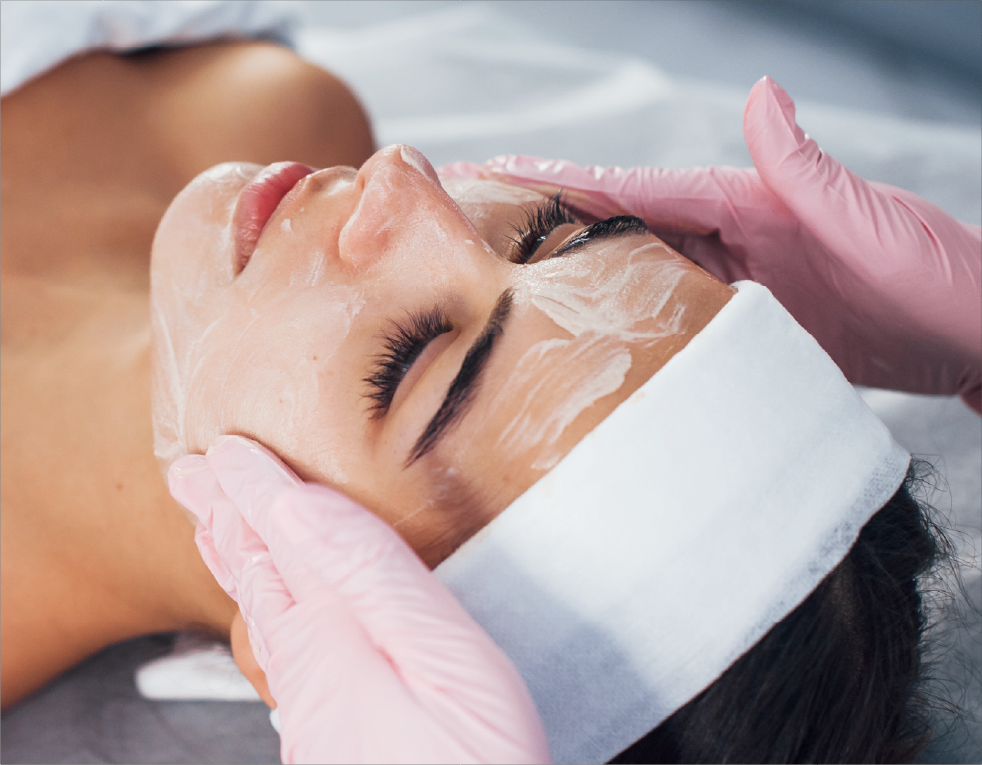
What is Peeling?
Peeling is a skin care application that removes dead cells accumulated on the surface of the skin and supports the skin's self-renewal. Skin regeneration is stimulated by chemical or mechanical means, thus aiming to achieve a brighter, smoother and fresher appearance.
Thanks to the peeling process:
The dull appearance on the skin surface may decrease,
Improvement in the appearance of fine lines and blemishes can be achieved,
Skin tone can be balanced,
The appearance of pores may be reduced.
📌 Peeling treatments are personalized based on skin type and needs. The most appropriate method should be determined based on an analysis by your physician.
How to Apply Peeling?
Peeling procedures can be applied in different types:
1. Superficial Peeling
Mild acids (such as glycolic acid, lactic acid) are used.
It helps to clean dead cells from the upper layer of the skin.
The recovery time after the procedure is usually very short.
2. Medium Peeling
Stronger acids such as TCA (trichloroacetic acid) are used.
It can be preferred for fine lines and pigmentation problems.
Recovery time may take several days.
3. Deep Peeling
It is performed with more concentrated acids, but this application requires clinical evaluation.
It may be effective in reducing signs of skin aging.
Application Period:
The peeling process usually takes 20-30 minutes.
💡 You can contact us to find out which type of peeling is right for you.
In Which Situations Is Peeling Preferred?
Peeling is generally preferred for the following skin needs:
✅ Skin Renewal and Revitalization
Revitalizing dull, tired skin.
Giving the skin a brighter appearance.
✅ Blemish and Pigmentation Problems
Lightening sun spots or skin tone irregularities.
✅ Pore Tightening
It helps reduce the appearance of pores.
✅ Fine Lines and Wrinkles
It helps alleviate fine lines that occur due to age.
📌 To choose between peeling types, we recommend that you get a detailed skin analysis from your physician.
Things to Consider Before and After Peeling
Before Application:
Before the application, the skin is cleansed and makeup is removed.
It is recommended to avoid intense exposure to the sun.
After Application:
It is important to use sunscreen after the application.
Appropriate products should be used to moisturize the skin and prevent sensitivity.
Mild redness or flaking after the procedure is normal.
📞 You can contact us for detailed information about skin care after peeling.
How Many Peeling Sessions Should I Have?
The number of peeling sessions varies depending on the skin type and the problem to be treated:
2-4 sessions for light blemishes and skin revitalization
For more intense pigment problems or signs of aging, 4-6 sessions may be recommended.
📌 Consult your doctor to find out the most appropriate number of sessions.
💡 If you would like to get detailed information, you can contact us.
📌 If you have any questions, you can consult our expert team.
Frequently Asked Questions
Is the peeling process painful?
A slight burning or stinging sensation may be experienced. Discomfort is generally minimal with superficial peels.
Will there be peeling of the skin after peeling?
Depending on the type of peel, you may experience mild flaking or peeling. This is part of the skin's renewal process.
When will results be seen?
A brightening effect may be noticeable after the first application. Regular sessions are recommended for more visible results.

 English
  Turkish
  Arabic
  German